




- 1.0Core Positioning of ASME B16.5 and Latest Editions
- 2.0Scope of Application and Key Boundaries of ASME B16.5
- 3.0Core Provisions and Key Interpretations of ASME B16.5
- 3.1What Is the ASME B16.5 Pressure–Temperature (P–T) Rating?
- 3.2What Are the Dimensional and Tolerance Requirements in ASME B16.5?
- 3.3What Are the Marking Requirements Under ASME B16.5?
- 3.4What Are the Pressure Testing Requirements in ASME B16.5?
- 3.5What Are the Requirements for Associated Flange Components?
- 3.6Temperature Considerations in Flange Service
- 3.7How to Determine the Required Flange Pressure Class
- 4.0Comparison of ASME B16.5 with Other Related Standards
- 5.0Typical Industry Applications of ASME B16.5
- 6.0Frequently Asked Questions About ASME B16.5
- 7.0Importance of ASME B16.5
- 8.0Relationship Between ASME B16.5 Flange Manufacturing and Pipe Prefabrication Processes
ASME B16.5 is a core standard developed by the American Society of Mechanical Engineers (ASME) for pipe flanges and flanged fittings. Its full title is Pipe Flanges and Flanged Fittings: NPS 1/2 through NPS 24, Metric/Inch Standard. This specification serves as a widely recognized technical reference for flange connections in piping systems across the oil & gas, petrochemical, power generation, and chemical processing industries worldwide.
During the design and construction of piping systems, engineers rely on ASME/ANSI standards and codes to ensure compliance with required pressure integrity criteria. ASME B16.5 specifically establishes the governing requirements for flanges and flanged fittings within that framework.
1.0Core Positioning of ASME B16.5 and Latest Editions
Common / Latest Editions:ASME B16.5-2017 remains widely used in many projects. The most recent edition is ASME B16.5-2020 (published in 2021), which supersedes the 2017 edition.
Primary Function:
- Unify pressure–temperature ratings, materials, dimensions, tolerances, marking, and testing requirements for flanges
- Ensure interchangeability between manufacturers and compatibility across systems
- Provide clear criteria for design, selection, and inspection
- Reduce risks of component mismatch, system failure, safety hazards, and economic loss
- Establish reference data for pressure integrity and simplify engineering design
2.0Scope of Application and Key Boundaries of ASME B16.5
2.1What Nominal Pipe Sizes (NPS) Are Covered by ASME B16.5?
Flanges
- Class 150 / 300 / 400 / 600 / 900 / 1500: NPS 1/2 through NPS 24
- Class 2500: NPS 1/2 through NPS 12 (limited to 12 inches maximum)
Flanged Fittings (Elbows, Tees, Reducers, Crosses, etc.)
- Class 150 / 300: NPS 1/2 through NPS 24
- Class 400 / 600 / 900 / 1500: NPS 1/2 through NPS 24
- Class 2500: NPS 1/2 through NPS 12, in accordance with Nonmandatory Appendix E
Applications exceeding NPS 24 are typically governed by ASME B16.47.
2.2What Pressure Classes Are Defined in ASME B16.5?
ASME B16.5 establishes seven pressure classes:150, 300, 400, 600, 900, 1500, and 2500
These class designations are dimensionless and represent pressure–temperature ratings rather than direct pressure values.
- Class 400 is less commonly used in current industrial practice
- Class 75 does not appear in ASME B16.5 and is only found in ASME B16.47 Series B large-diameter flanges
2.3What Are the Material and Manufacturing Requirements Under ASME B16.5?
Primary Material Requirements:Flanges and flanged fittings shall be manufactured from forged or cast materials.Exceptions: Blind flanges and certain reducing flanges may be manufactured from plate material. Plate stock is restricted to these specific flange types and is not permitted for other configurations.
Common Materials:
- Carbon Steel: ASTM A105, ASTM A216
- Stainless Steel: ASTM A182 F304/F304L, F316/F316L
- Alloy Steel: ASTM A182 F5, F9, F11, F22
Manufacturing Requirements:Flanges and flanged fittings shall be manufactured as integral components. Assembly by welding or joining multiple pieces to form a finished flange is not permitted.
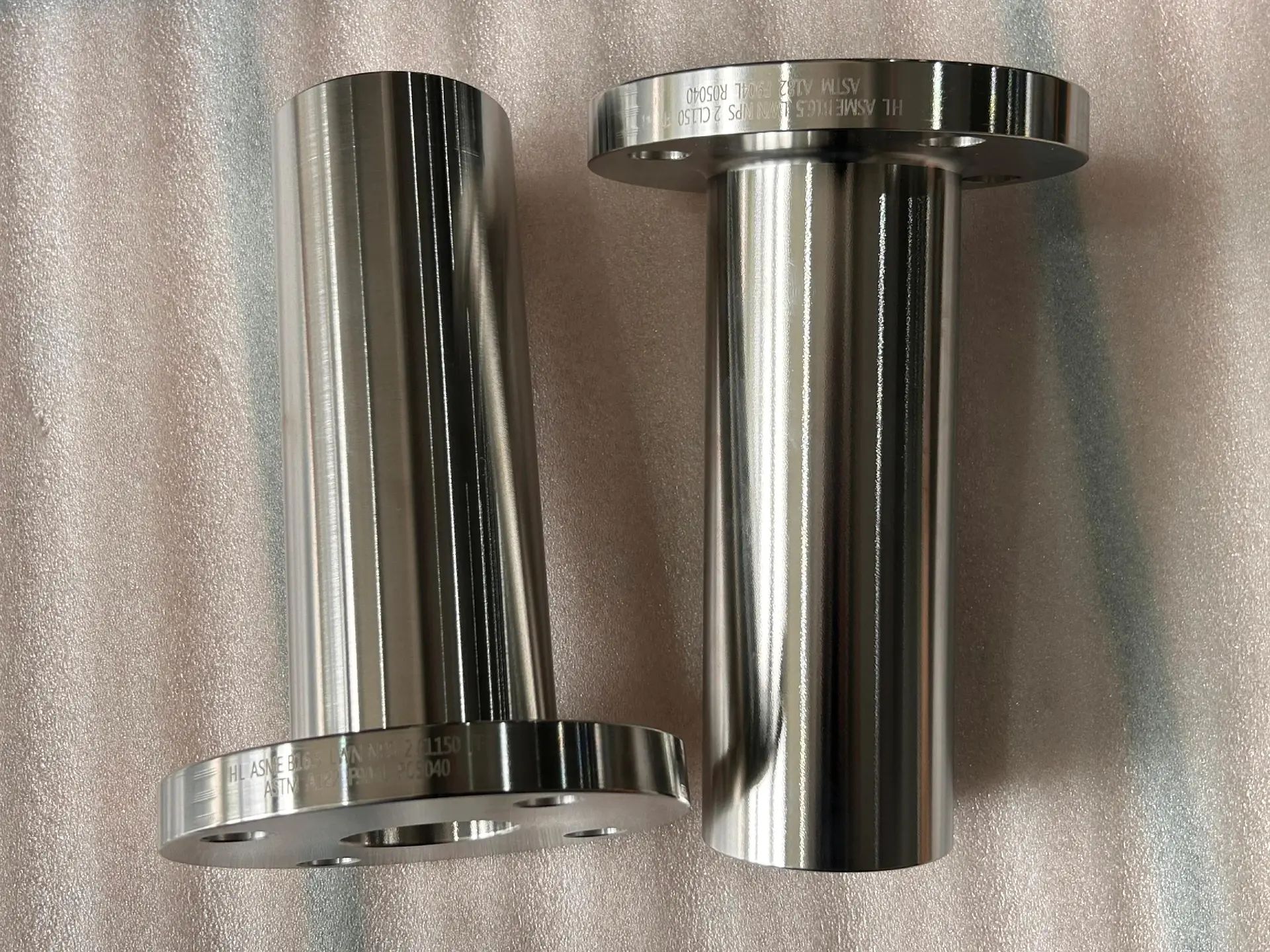
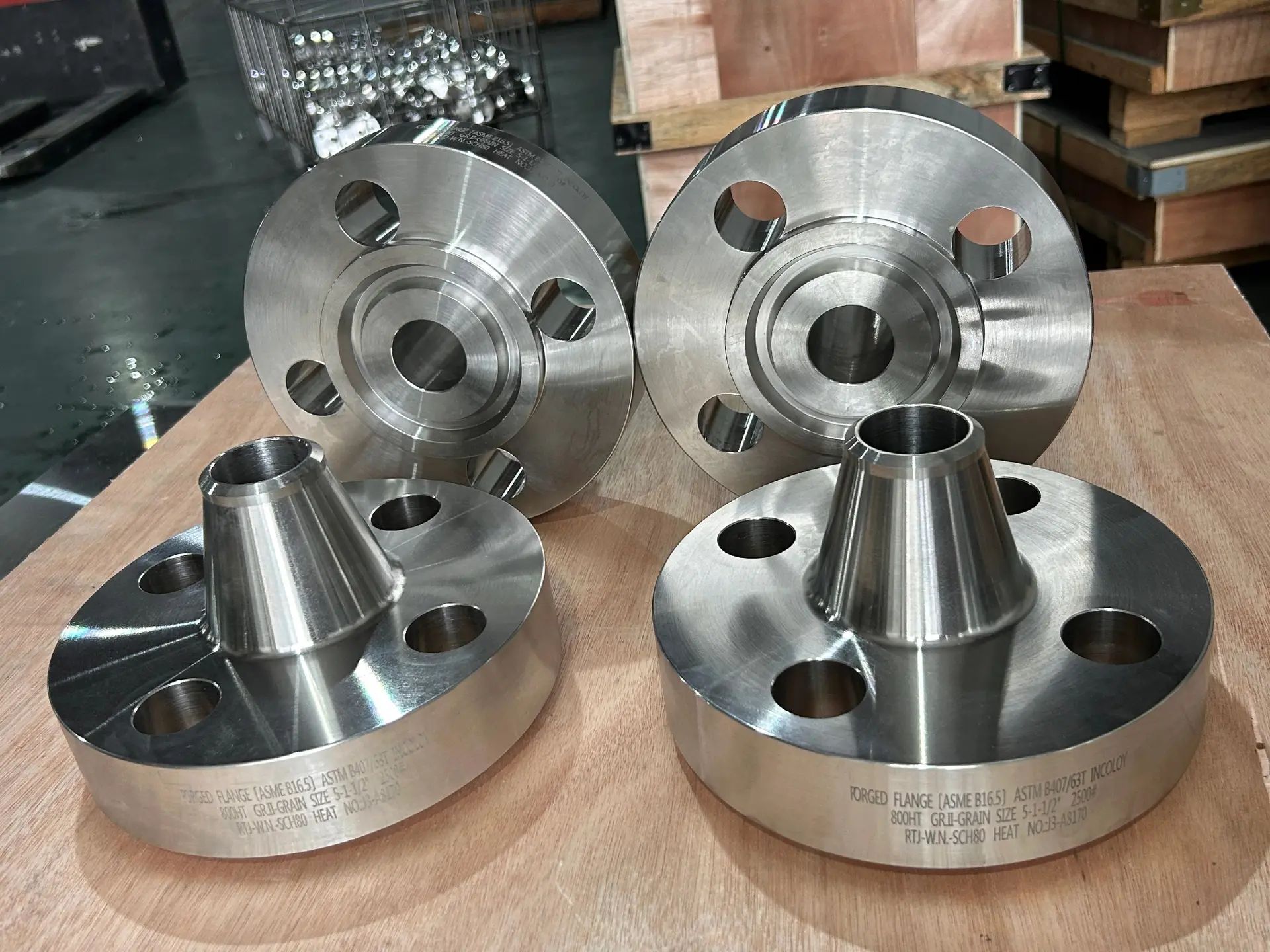
2.4What Types of Flanges Are Included in ASME B16.5?
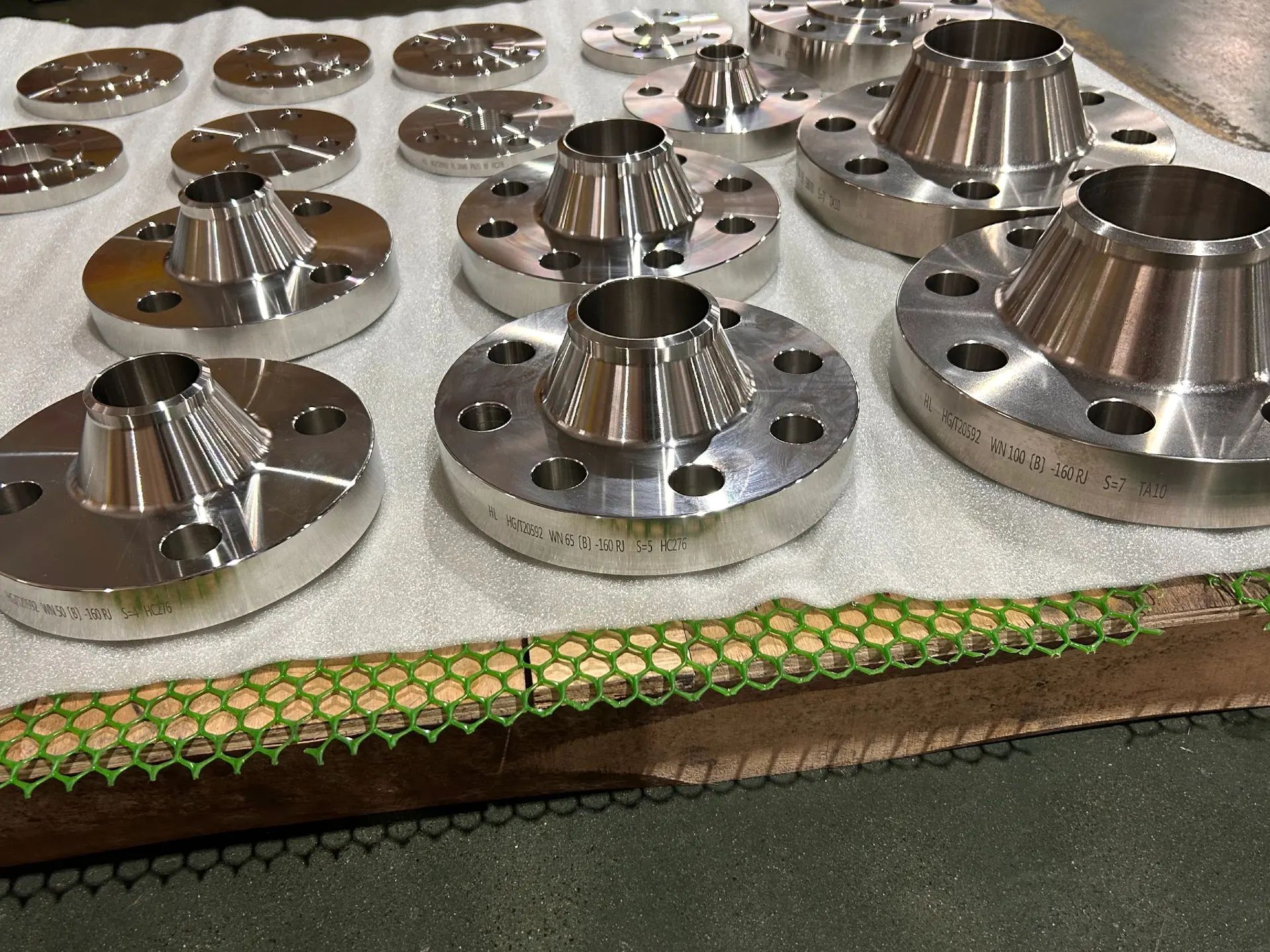
- Welding Neck Flange (WN)
- Slip-On Flange (SO)
- Socket Weld Flange (SW)
- Threaded Flange (Th)
- Lap Joint Flange (LJ)
- Blind Flange (BL)
3.0Core Provisions and Key Interpretations of ASME B16.5
3.1What Is the ASME B16.5 Pressure–Temperature (P–T) Rating?
Definition:The maximum allowable working pressure of a given material at a specified temperature (expressed in psig, kPa, or bar). The pressure–temperature rating is the primary basis for flange selection.
Material Groups:The 2017 and 2020 editions define a total of 34 material groups:
- Carbon Steel & Low-Alloy Steel: 8 groups
- High-Alloy Steel: 10 groups
- Nonferrous Materials: 16 groups
Fundamental Rule:Flanges of the same material group and the same pressure class share identical pressure–temperature ratings.
Important Note:Pressure integrity is not equivalent to leak-tight integrity. Pressure integrity ensures containment under specified pressure conditions but does not account for additional stresses, structural stability of the pressure boundary, or external loading effects.
3.2What Are the Dimensional and Tolerance Requirements in ASME B16.5?
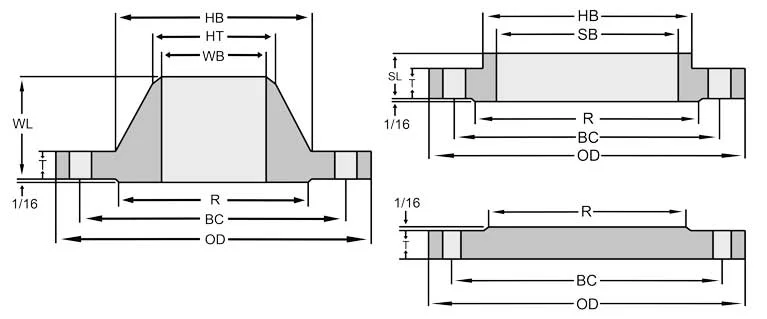
Key Tolerances (Summary):
Center-to-Face / End Tolerance
- NPS ≤ 10: ±1.0 mm (±0.03 in.)
- NPS ≤ 12: ±1.5 mm (±0.06 in.)
Flange Thickness Tolerance
- NPS ≤ 18: +3.0 / –0 mm (+0.12 / –0.00 in.)
- NPS ≥ 20: +5.0 / –0 mm (+0.19 / –0.00 in.)
Facing Tolerances
- Tongue and Groove Facing Inside/Outside Diameter: ±0.5 mm
- 0 mm Raised Face Outside Diameter: ±1.0 mm
- 0 mm Raised Face Outside Diameter: ±0.5 mm
- Ring Joint Groove Tolerances: Refer to Table II-5 of the standard
Weld-End Dimensional Tolerance
- NPS ≤ 5: Outside Diameter +2.0 / –1.0 mm
- NPS ≥ 6: Outside Diameter +4.0 / –1.0 mm
Perpendicularity Tolerance
- NPS ≤ 5: 1°
- NPS ≥ 6: 0.5°
Note: Tolerance conformance shall be determined in accordance with ASTM Practice E29 rounding methods.
3.3What Are the Marking Requirements Under ASME B16.5?
Marking complies with MSS SP-25. Mandatory information:
- Manufacturer’s Name or Trademark
- Material Specification (e.g., ASTM A105, ASTM A182 F316)
- Pressure Class (Class XXX)
- Standard Designation: ASME B16.5
- Nominal Pipe Size (NPS)
- Ring Joint Flanges: Letter “R” and corresponding ring groove number
- Temperature Rating (Optional)
3.4What Are the Pressure Testing Requirements in ASME B16.5?
- Flanges: Pressure testing of the flange body is not mandatory
- Flanged Fittings: Shell pressure testing required at minimum 1.5 times rated pressure at 38°C (100°F)
- System Hydrostatic Testing: May be performed at shell test pressure; higher pressures are user’s responsibility
3.5What Are the Requirements for Associated Flange Components?
- A complete flanged joint includes flange, gasket, and bolting
- Gaskets for ring-type joints: Comply with ASME B16.20
- Bolting: Selected to match flange pressure class and material; tightening per ASME PCC-1
3.6Temperature Considerations in Flange Service
High-Temperature ServiceCreep and relaxation may reduce bolt preload and sealing. Avoid severe external loads for Class 150 above 200°C and other classes above 400°C.
Low-Temperature ServiceCarbon steel toughness decreases at low temperatures. Impact testing may be required. Below –29°C (–20°F), flange ratings are limited.
3.7How to Determine the Required Flange Pressure Class
- Define Service Conditions: Identify maximum working pressure and temperature
- Select Material and Material Group
- Determine Pressure Class from P–T tables: Choose the smallest class with rating ≥ required pressure at design temperature
4.0Comparison of ASME B16.5 with Other Related Standards
4.1ASME B16.5 vs. ASME B16.47
| Comparison Item | ASME B16.5 | ASME B16.47 |
| Nominal Pipe Size | 1/2 through 24 | 26 through 60 |
| Pressure Classes | 150, 300, 400, 600, 900, 1500, 2500 | 75, 150, 300, 400, 600, 900 |
| Flange Types | Six types | Welding Neck and Blind only |
| Series Classification | No series division | Series A and Series B |
4.2ASME B16.5 vs. ASME B16.34
| Standard | Primary Scope | Application Range |
| ASME B16.5 | Flanges and Flanged Fittings | NPS 1/2 through 24, Class 150 through 2500 |
| ASME B16.34 | Valves (Gate, Globe, etc.) | All sizes, pressure classes aligned with B16.5 |
4.3ASME B16.5 vs. ASME B16.1
- ASME B16.5: Steel and alloy steel pipe flanges and flanged fittings
- ASME B16.1: Gray cast iron pipe flanges and flanged fittings
4.4ASME B16.5 vs. DIN / JIS / BS Flange Standards
| Standard Type | Facing Design | Primary Region | Core Advantage |
| ASME B16.5 (American) | Primarily RF | Global, oil & gas, petrochemical | High-pressure/high-temperature suitability |
| DIN / EN 1092 (European) | Primarily Flat | Europe | Compatible with European piping systems |
| JIS B2220 (Japanese) | Primarily Flat | Japan and Asian markets | Good dimensional compatibility in Asia |
| BS (British) | Primarily Flat | UK and Commonwealth | Conforms to British piping specifications |
5.0Typical Industry Applications of ASME B16.5
- Oil and Gas Processing and Offshore Systems
- Petrochemical Plants, Refineries, Chemical Production
- Power Generation (Thermal and Nuclear)
- Food and Beverage Manufacturing
- Water Treatment Facilities
- Shipbuilding and Marine Engineering
- General Industrial Medium- and High-Pressure Piping
6.0Frequently Asked Questions About ASME B16.5
Q: What Is the Latest Edition of ASME B16.5?A: ASME B16.5–2020 (published 2021).
Q: How to Confirm Compliance with ASME B16.5?A: Check product marking or request Material Test Reports (MTRs).
Q: How Are Mixed Pressure Class Joints Rated?A: The joint is rated at the lower pressure–temperature value.
Q: Are ASME B16.5 and ANSI B16.5 the Same?A: Yes, they are the same standard; only the issuing organization designation differs.
7.0Importance of ASME B16.5
- Establishes unified design, manufacturing, and inspection criteria
- Ensures interchangeability and compatibility among manufacturers
- Defines clear pressure–temperature ratings and material requirements
- Provides a safety baseline for piping systems
- Simplifies engineering design and reduces specification errors
- Serves as a globally recognized reference for medium- and high-pressure piping
8.0Relationship Between ASME B16.5 Flange Manufacturing and Pipe Prefabrication Processes
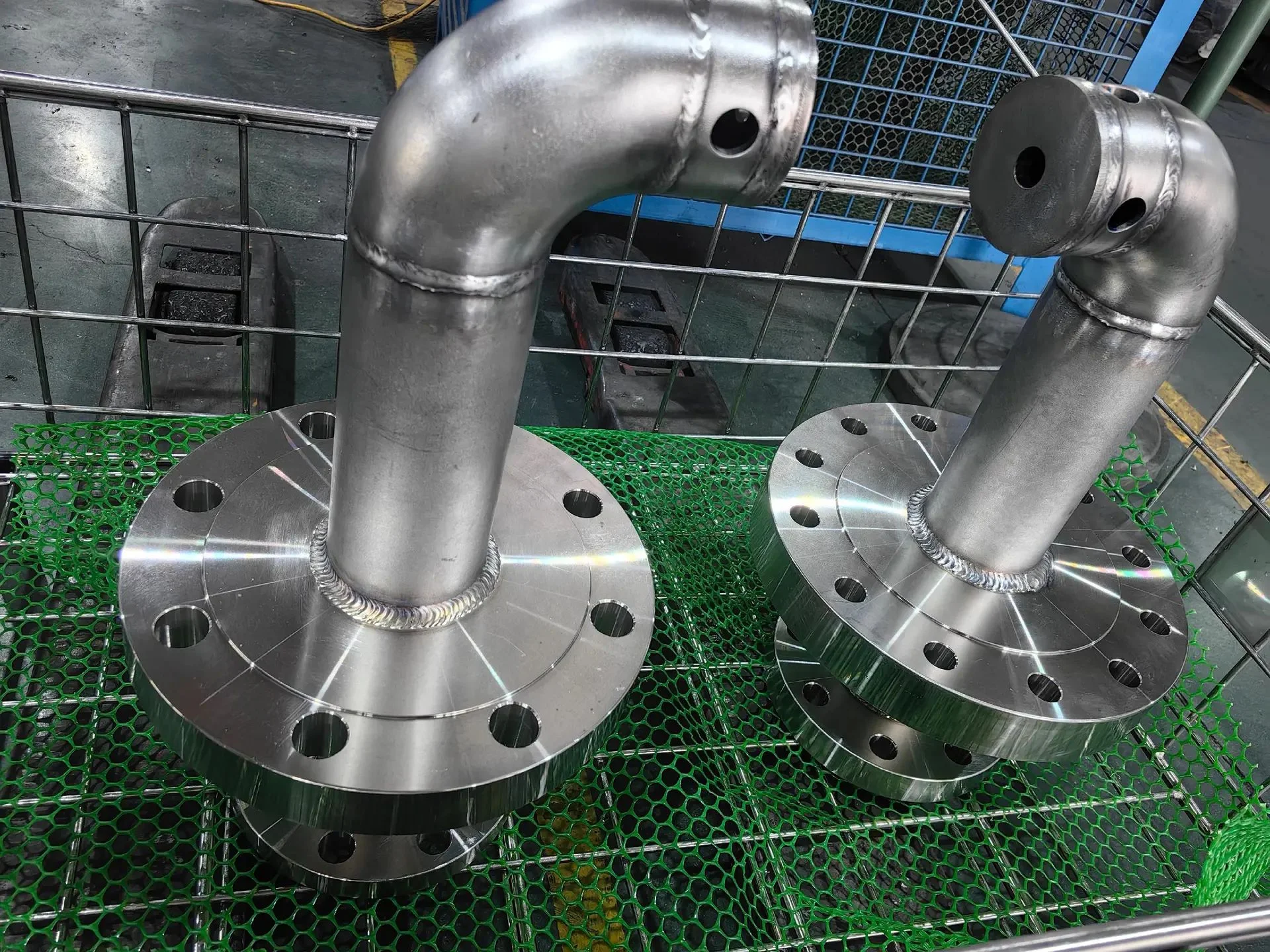
Flanges are closely integrated with piping prefabrication. Common processes include fixed-length cutting, weld bevel preparation, hole machining, and bending. Typical equipment includes automatic pipe cutting machines, beveling machines, punching machines, and bending machines.
While ASME B16.5 does not specify equipment, high-precision manufacturing is essential to meet dimensional tolerances and sealing performance required by the standard.
8.1ASME B16.5-2025 Pipe Flanges and Flanged Fittings PDF Download
Reference
https://www.unifiedalloys.com/blog/asme-b16-5-standards-flange-pressure-ratings
https://www.texasflange.com/blog/asme-b16-5-standards/
https://www.asme.org/codes-standards/find-codes-standards/b16-5-pipe-flanges-flanged-fittings-nps-1-2-nps-24-metric-inch-standard